
Croatian Bureaucracy Vocabulary For Managing Expat Paperwork

Author
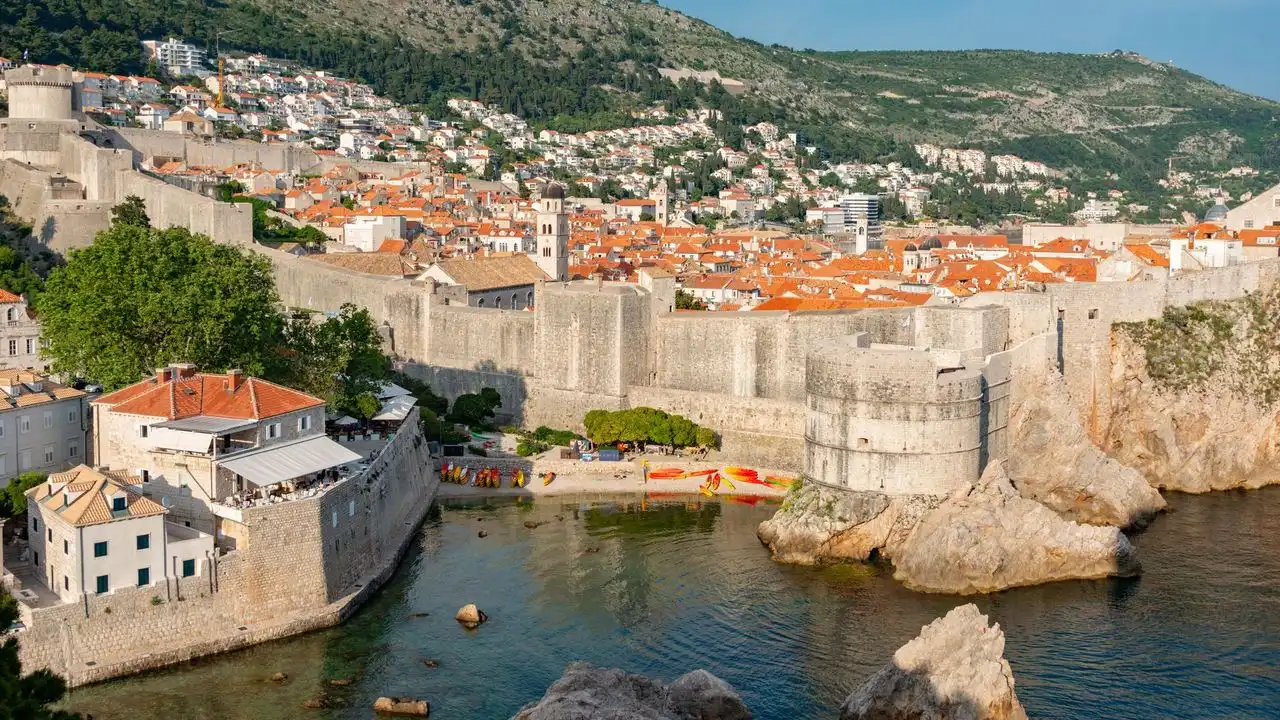
Moving to Croatia requires dealing with a significant amount of local bureaucracy.
Navigating government offices is much easier when you know the exact Croatian words for the paperwork you need.
This guide provides the essential vocabulary required to handle your expat documentation with confidence.
You’ll learn the terms for different government offices, necessary documents, and the phrases you must use at the counter.
Table of Contents:
The police station and immigration (MUP)
The most important institution for any expat in Croatia is the Ministry of the Interior.
This is known locally as Ministarstvo unutarnjih poslova, or simply MUP.
You’ll visit the local police station to handle your residency and identification cards.
Inside the building, you’ll need to find the correct counter for foreigners.
Here are the most common nouns you’ll hear in this setting.
| Croatian | English |
|---|---|
| MUP | Ministry of the Interior |
| policijska postaja | police station |
| šalter | counter / desk |
| stranac | foreigner (male / general) |
| strankinja | foreigner (female) |
| državljanstvo | citizenship |
| boravište | temporary residence |
| prebivalište | permanent residence |
| referent | clerk / official |
Essential document vocabulary
You’ll need to present various forms of identification and proof of address.
Croatian clerks are very specific about which documents you must provide.
The most famous requirement in Croatia is a personal identification number called an OIB.
You must also bring physical copies of almost everything you submit.
Here’s the vocabulary for the paperwork you need to keep in your folder.
| Croatian | English |
|---|---|
| dokument | document |
| OIB (osobni identifikacijski broj) | personal identification number |
| putovnica | passport |
| osobna iskaznica | ID card |
| obrazac | form |
| potvrda | certificate / proof |
| kopija | copy |
| pečat | stamp |
| potpis | signature |
| domovnica | certificate of citizenship |
| rodni list | birth certificate |
| ugovor o najmu | rental contract |
Useful verbs for paperwork
The clerk at the counter will give you specific instructions on what to do with your forms.
You must know these action words to easily follow their directions.
Most of these interactions revolve around filling out, signing, and submitting documents.
| Croatian | English |
|---|---|
| ispuniti | to fill out |
| potpisati | to sign |
| predati | to submit / hand in |
| donijeti | to bring |
| platiti | to pay |
| čekati | to wait |
| ovjeriti | to notarize / certify |
| produžiti | to extend |
Common phrases at the counter
Speaking directly to a government official can be challenging at first.
Using a few polite phrases will make the process go much smoother.
Here’s how you can explain what you need when you approach the glass window.
Trebam predati dokumente za privremeni boravak.
Gdje je šalter za strance?
Ovdje je moja putovnica i kopija ugovora o najmu.
Trebam li ovdje potpisati?
Fali vam jedan papir.
A very common phrase you might hear is fali vam jedan papir.
This phrase translates to “you’re missing one paper”.
It’s a well-known cultural aspect of Croatian bureaucracy that you almost always need one more document than you brought.
The notary and post office
The police station isn’t the only place you’ll visit to sort out your paperwork.
You’ll frequently need to visit a notary public to legally certify copies of your documents.
A notary public in Croatia is called a javni bilježnik.
You might also need to visit the local post office to pay government administrative fees.
Administrative fees are called upravne pristojbe.
In the past, you had to buy physical tax stamps called biljezi or taksene marke to attach to your forms.
Depending on the region and generation of the speaker, you’ll hear people use both biljeg and taksena marka interchangeably.
While these stamps are slowly being phased out in favor of electronic payment slips, you’ll still hear older locals and clerks use the words.
