
How Hard Is It To Learn Croatian? Let's Be Realistic

Author
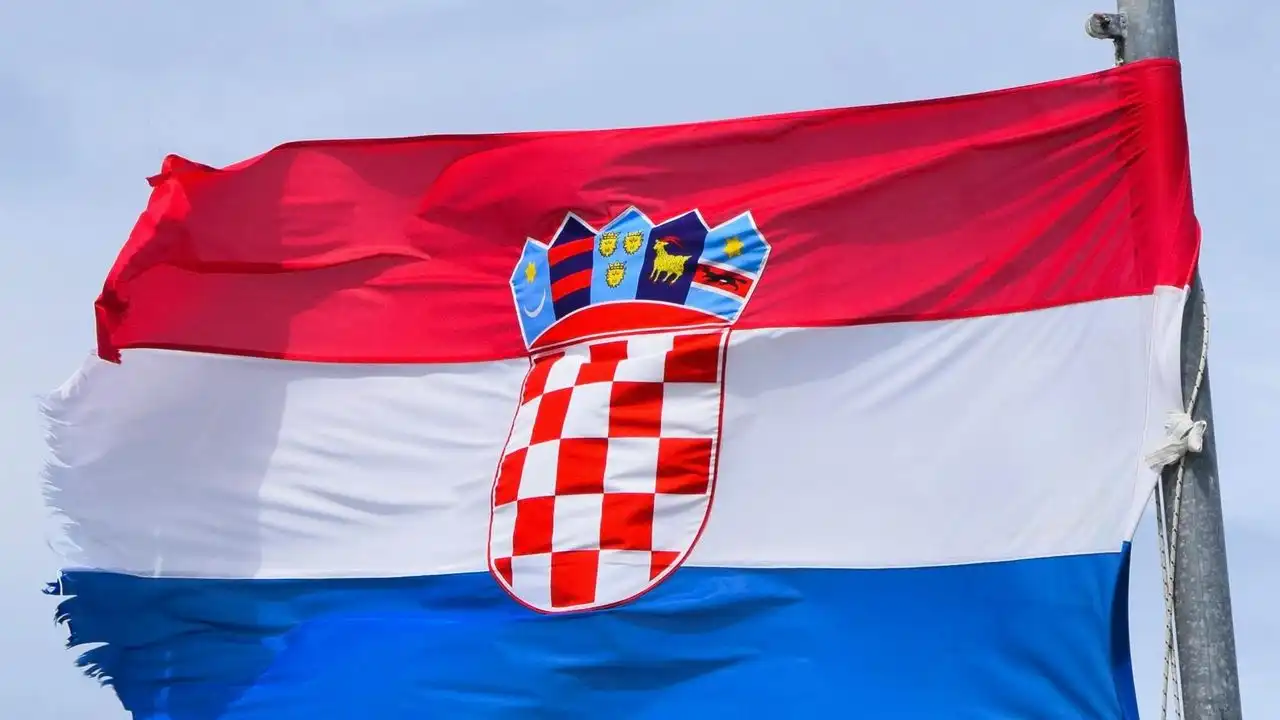
Croatian is purported to be a challenging language for English speakers.
The US Foreign Service Institute (FSI) groups languages by how long it takes an English speaker to learn them. They put Croatian in Category III. This means it’s supposedly harder than Spanish or French, but much easier than Arabic, Japanese, or Mandarin.
Whether or not that’s actually true, “hard” doesn’t mean impossible.
Croatian is completely doable if you understand what to expect.
Let’s look at what makes Croatian difficult, what makes it surprisingly easy, and how you can tackle it as a beginner.
Table of Contents:
The hard parts of the language
When native English speakers struggle with Croatian, they’re usually struggling with two main things: grammar rules and new vocabulary.
Here are the main challenges you’ll face.
1. The seven noun cases
In English, the word “car” is always “car”, whether you’re driving the car, in the car, or talking about the car.
In Croatian, words change their endings depending on their job in the sentence. This concept is called “cases,” and Croatian has seven of them. This means a single noun can have several different endings.
Here’s a quick look at the seven cases:
| Case Name | What it does (simply) |
|---|---|
| Nominative | The main subject of the sentence. |
| Genitive | Shows possession or origin (like “of” in English). |
| Dative | The indirect object (giving something “to” someone). |
| Accusative | The direct object (the thing receiving the action). |
| Vocative | Used for directly calling out to someone. |
| Locative | Used for locations (being “in” or “on” something). |
| Instrumental | Used for tools or company (doing something “with” someone/something). |
Because of cases, the word for Croatia (Hrvatska) changes to Hrvatskoj when you say “I live in Croatia.”
2. Verb aspect
In Croatian, verbs come in pairs. One version of the verb describes an action that’s ongoing or incomplete (imperfective). The other version describes an action that’s completely finished (perfective).
For example, the English verb “to read” translates to two different verbs in Croatian: čitati (the ongoing process of reading) and pročitati (to read something completely to the end). You have to learn both versions for most verbs!
3. Unfamiliar vocabulary
Because English has Germanic and Romance roots, we share a lot of words with Spanish, French, and German.
Croatian is a Slavic language. Aside from modern loanwords (like kompjuter or vikend), most of the vocabulary will look completely alien to you at first. You’ll have to build your vocabulary from scratch.
The easy parts of the language
Despite the complex grammar, Croatian actually has several features that make it much easier to learn than English or French.
1. Read it exactly as it’s written
Croatian is a phonetic language. This means one letter equals one sound, always.
In English, the letter “c” can sound like “k” (cat) or “s” (city). In Croatian, there are no hidden rules, silent letters, or spelling surprises. Once you spend an hour learning the Croatian alphabet, you can accurately read any word out loud, even if you don’t know what it means yet.
2. No articles to memorize
Croatian doesn’t use words like “a”, “an”, or “the”.
If you want to say “the dog”, you just say “dog”. If you want to say “a dog”, you just say “dog”. This saves you from constantly worrying about which article to use!
Imam psa.
3. Simple everyday tenses
While English has complicated tenses like the “present perfect continuous” (I have been walking), spoken Croatian keeps it simple. In everyday conversation, you’ll almost exclusively use just three tenses: the past, the present, and the future.
Regional variations and dialects
If you’re learning Croatian, you need to know that people speak differently depending on where they live.
Croatian has three main regional dialects. They’re named after the word people use to say “what” in that region: što, kaj, and ča.
1. Štokavski (Shtokavian)
This is the standard, official version of Croatian. It uses the word što for “what”. This is the dialect you’ll hear on the news, read in books, and learn in almost every language course.
Što radiš?
2. Kajkavski (Kajkavian)
Spoken mostly in the capital city of Zagreb and the northern part of the country. They use the word kaj for “what”.
Kaj delaš?
3. Čakavski (Chakavian)
Spoken along the beautiful Dalmatian coast, on the islands, and in the Istria region. They use the word ča for “what”, and their vocabulary is heavily influenced by Italian.
Ča delaš?
If you’re a beginner, only focus on Standard Croatian (Štokavski). Everyone in the country understands it, even if they speak a different dialect at home.
Realistic learning tips for beginners
If you want to succeed with Croatian, you need to set your expectations correctly. Here’s how I recommend approaching the language:
Embrace the mistakes
Don’t wait until you understand all seven noun cases perfectly before you start speaking. That will take years! Speak with bad grammar on purpose. Locals will still understand you if you use the wrong case ending, and they’ll be thrilled that you’re even trying.
Learn whole phrases, not just rules
Instead of memorizing a chart for the dative case, just memorize standard phrases. Learn how to say “How are you?” (Kako ste?) as a complete chunk of language.
Immerse yourself early
Surround yourself with the sounds of the language. Listen to Croatian pop music on YouTube, stream a Croatian radio station, or find a Croatian show with subtitles. Your brain needs time to get used to the unique Slavic consonant combinations.
Learning Croatian takes time and patience. Focus on communication first, and the rules will slowly fall into place over time.
